
The Mistake: Treating This Like a Northern Winterizing Checklist
Every November, the same generic home-maintenance advice circulates online: seal drafts, insulate against the cold, protect pipes from freezing. It's tempting to apply that same list to your garage, especially since "winterize your garage door" sounds like it should mean the same thing everywhere. It doesn't. In Pembroke Pines, you're not fighting frost — you're coming off the tail end of hurricane season and sliding into a drier, cooler stretch of weather that puts different stress on your door and opener. Spend your time weatherstripping against cold air that isn't coming, and you'll miss the things that actually fail here: corroded hardware, misaligned tracks from storm season, and springs that took on more cycles and moisture than usual over the past few months.
What "Winter" Actually Means for Your Garage Door Here
From November through early spring, South Florida humidity drops and daily temperature swings get wider — warm afternoons, noticeably cooler nights. That shift matters more than people expect. Wood and composite panels that absorbed moisture and swelled during the humid summer and storm season start to dry out and contract. Metal components that were running fine in heavy humidity can suddenly squeak, bind, or reveal play in the hardware now that things have tightened or shifted. If your door has been sluggish, noisy, or slightly off-track without an obvious cause, seasonal drying is often the reason it's showing up now.
Step One: Do a Post-Hurricane-Season Walkthrough
Even if your door made it through the season without an obvious incident, it's worth a real inspection before you file storm season away for the year:
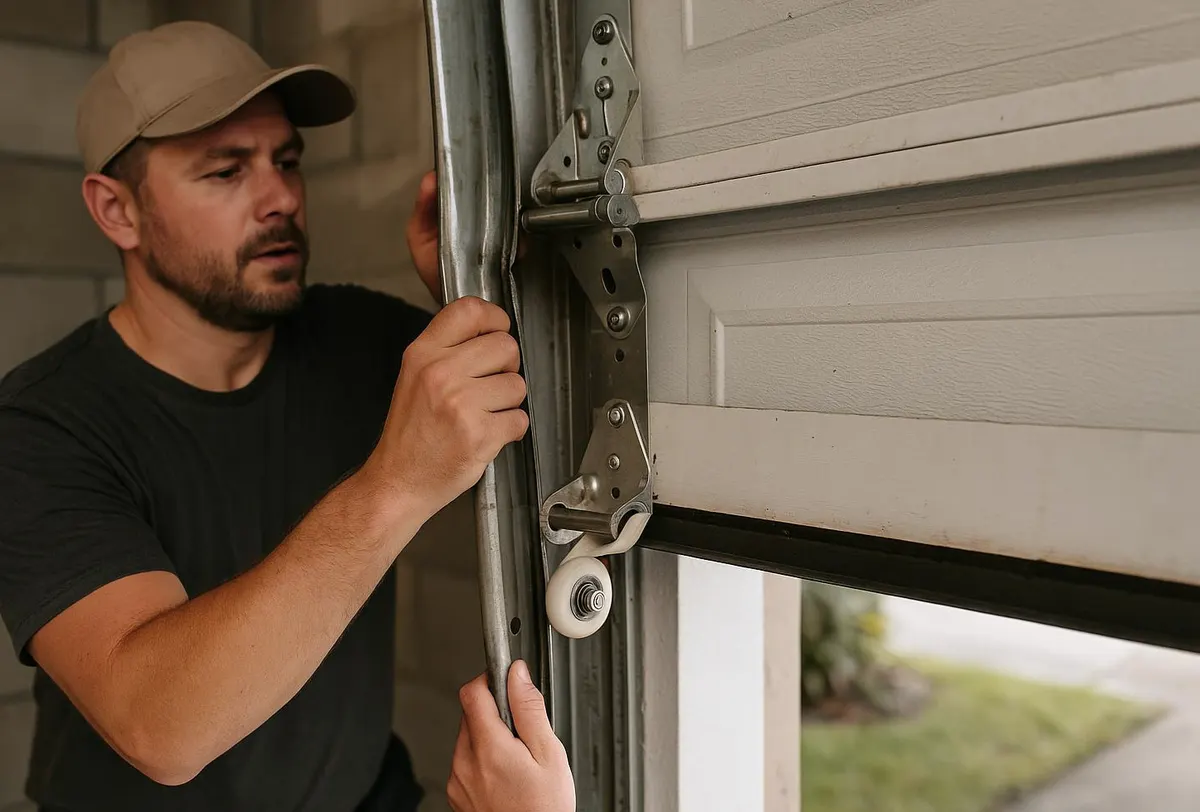
- Check the tracks for dents, bent sections, or debris that blew in during heavy wind or rain and never got cleared out.
- Inspect panels for small dings or hairline cracks from wind-driven debris — damage that's easy to miss until it's letting water through on the next downpour.
- Test the wind-load hardware — reinforcement struts, track bolts, and the header connection — since these take the brunt of pressure during storms and can loosen over repeated cycles even without a direct hit.
- Look at weatherstripping along the bottom and sides. Afternoon downpours all summer can leave it brittle, torn, or pulling away, which means water intrusion during the next heavy rain.
Step Two: Address Rust Before It Spreads
If you're anywhere near the coast, salt air has likely been working on your hardware all year, and humidity speeds that process along. Now is a good time to look closely at:
- Spring coils, especially where they wind around the shaft — surface rust here is a warning sign, not just a cosmetic issue, since it weakens the metal over time.
- Hinges and rollers, where rust often shows up as stiffness or a grinding sound rather than visible orange flaking.
- Track bolts and brackets, which corrode from the inside of the threads out and can fail quietly.
A light coat of a silicone-based lubricant on hinges, rollers, and springs helps displace moisture and slow corrosion. Avoid WD-40 as a long-term lubricant — it's a solvent and degreaser, not a lubricant, and it can actually strip the protective coating that's already on your hardware.
Step Three: Recalibrate for the Season's Usage Changes
Garage door use tends to shift this time of year — more deliveries, holiday guests, maybe a teen driver home and in and out more often. A door that's been limping along all summer gets exposed fast under that extra traffic. A few quick checks:
- Balance test: disconnect the opener, lift the door halfway by hand, and let go. If it drops or shoots up, the springs are compensating poorly and are due for adjustment or replacement.
- Auto-reverse test: place a block of wood in the door's path and close it. If it doesn't reverse on contact, the safety sensors need attention before anyone relies on this daily.
- Listen for new noises — grinding, popping, or a rhythmic thud usually points to a roller, hinge, or spring issue rather than something that will resolve on its own.
When to Call Pembroke Pines Door & Opener
If your balance test fails, if you're seeing rust on the spring coils, or if the door is noticeably harder to lift than it used to be, that's not a maintenance task to put off until it fails completely — a spring under stress can snap without much warning. That's exactly what our Garage Door Spring Repair service is for: we assess wear, replace springs matched to your door's weight, and make sure the whole system is balanced correctly rather than just patched. If your post-storm walkthrough turned up bent tracks, panel damage, or a door that's visibly off its rails, our Off Track Door Repair and Garage Door Panel Replacement services handle that directly, and we can also run a full Garage Door Maintenance & Tune-Up to catch smaller issues — loose hardware, worn weatherstripping, sensor misalignment — before they turn into a Saturday morning emergency.
If anything on this list didn't pass the test at your place, give us a call. Pembroke Pines Door & Opener serves Pembroke Pines, Miramar, Cooper City, Davie, Weston, Hollywood, Southwest Ranches, and Hallandale Beach, and we're ready to get your door squared away before the holidays pick up.