
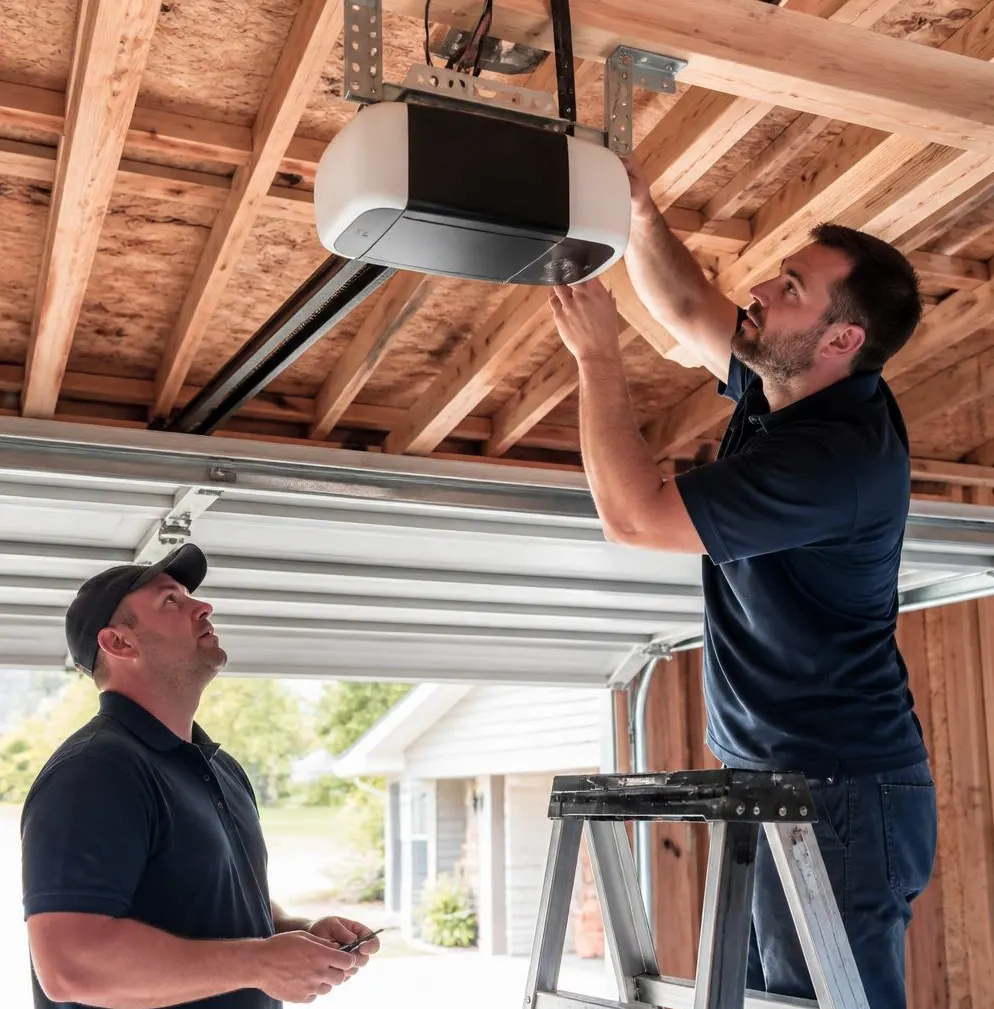
Rule of thumb: if your garage door feels heavy or stuck on a cool morning in Pembroke Pines, it's almost never actual ice. South Florida winters rarely drop low enough to freeze a door to the slab the way they do up north. The exceptions are real, though: an occasional hard freeze warning night in December or January, heavy dew that settles and then chills with a passing front, or a door that already has moisture problems built up from months of humid, salt-heavy air. In those cases, something that looks like "frozen solid" is usually a mechanical issue that cold weather just exposed.
What You'll Notice First
- The door feels unusually heavy when you try to lift it manually, or the opener strains and groans before it moves.
- The opener reverses partway up, or it stops and the light blinks without finishing the cycle.
- The door moves slower than normal, in small jerky steps instead of one smooth motion.
- You hear a scraping, grinding, or squealing sound that wasn't there before the temperature dropped.
- The bottom edge of the door seems stuck to the concrete and needs a firm tug to break free.
Any one of these on its own might be a coincidence. Two or more together, especially right after a cold front or a stretch of heavy dew, usually points to a specific cause worth checking in order.
Cause #1: The Bottom Seal Is Stuck to the Slab
This is the closest thing to "frozen to the ground" that actually happens here. The rubber weatherstripping along the bottom of the door can swell slightly from months of humidity, and on a cold, damp morning that swollen rubber can tack itself to a film of condensation on the concrete. It feels like the door is glued down.
The fix: Gently break the seal by hand, then check whether the weatherstripping has become brittle, cracked, or overly soft and sticky. A seal in that condition should be replaced rather than fought with every morning. This is a quick, low-cost repair and a normal part of garage door upkeep in a climate this humid.
Cause #2: Track Buildup, Alignment, or Rust
Before assuming anything is "frozen," a technician runs a hand along the tracks feeling for debris, rust, or a section that's pulled slightly out of alignment. Salt air near the coast and constant moisture indoors and out make steel tracks prone to surface rust, and that rust creates friction that feels a lot like resistance from the cold.
The fix: Clean the tracks, remove rust with a wire brush where it's just surface-level, and realign any bent or loose sections. If the track itself is corroded through or badly bent, it gets replaced rather than patched, since a misaligned track is also how doors end up running off their rollers entirely.
Cause #3: Spring Tension Has Shifted
Cold doesn't do much to torsion springs in a climate this mild, but corrosion does. Humidity and salt air gradually pit and weaken spring coils, and a spring that's already compromised can feel noticeably worse the first cool, damp morning after a stretch of hot weather. If the door feels heavy specifically when you lift it manually, not just when the opener runs, the spring is the next thing checked.
The fix: Springs aren't adjustable in any safe way for a homeowner to do themselves; a technician checks the coil condition and tension and replaces the spring if it's rusted, stretched, or simply worn out. This is one of the few garage door repairs where attempting it yourself is genuinely dangerous, given how much tension these springs hold.
Cause #4: Opener Settings Have Drifted
If the door moves fine by hand but the opener struggles, reverses, or stalls, the next check is the opener itself. Limit switches and force settings can drift over time, and a door that's gotten slightly heavier from any of the issues above can be enough to trip a force setting that used to work fine.
The fix: Reset and recalibrate the force and limit settings to match the door's current weight and resistance. If the opener's gears or belt have dried out or gummed up from age, lubrication or a belt adjustment solves it. If the motor itself is straining constantly, that's usually a sign the opener is undersized for the door or simply reaching the end of its service life.
Cause #5: Rollers and Hinges Need Lubrication
Last on the checklist, because it's the easiest fix: dry or rusted rollers and hinges. Afternoon downpours followed by hot, humid air create a cycle of wetting and drying that strips lubrication off moving parts faster than it would in a drier climate.
The fix: Clean off old grease and grime, then apply a silicone-based garage door lubricant to rollers, hinges, and the opener's chain or screw drive. Avoid WD-40 as a long-term lubricant here; it displaces moisture short-term but doesn't hold up well against sustained humidity.
Cause #6: A Swollen or Warped Panel
If the door only binds in one spot, check the panels themselves. Wood and composite doors can absorb moisture and swell slightly, enough to bind against the track or weatherstripping even when every mechanical part is working correctly.
The fix: Minor swelling sometimes resolves once drier weather returns, but a panel that's visibly warped, delaminating, or consistently binding needs to be replaced before it puts uneven stress on the rest of the door.
When to Call Pembroke Pines Door & Opener
If the door is stuck, reversing, or making new noises and the bottom seal isn't the obvious culprit, it's time to call. We'll run through tracks, springs, and opener settings in that order, the same way outlined above, rather than guessing or replacing parts that don't need it. A Garage Door Maintenance & Tune-Up covers lubrication, track alignment, and hardware checks in one visit and is worth scheduling before a door problem turns into a stuck-door emergency. If the issue traces back to a worn or rusted spring, our Garage Door Spring Repair service replaces it safely with the correct tension for your door's weight and size.
If your garage door in Pembroke Pines, Miramar, Cooper City, Davie, Weston, Hollywood, Southwest Ranches, or Hallandale Beach is feeling heavy, sluggish, or just not right, give us a call and we'll get it diagnosed and running smoothly again.